Reimagining Urban Space Through Skatepark-Inspired Installation Art
Bachelor Thesis — Communication Design, University of Europe for Applied Sciences, Berlin
Hybrid Ground is an interactive installation exploring the relationship between skateboarding, community, and public space.
The project started with a simple question: How can urban spaces bring skateboarders and the wider public together instead of pushing them apart?
Through my research, I explored the history and culture of skateboarding, the lack of accessible and well-maintained skate facilities, and the ways in which urban design can exclude certain communities. I translated these findings into a physical installation that brings the atmosphere of a skate spot into an exhibition space.
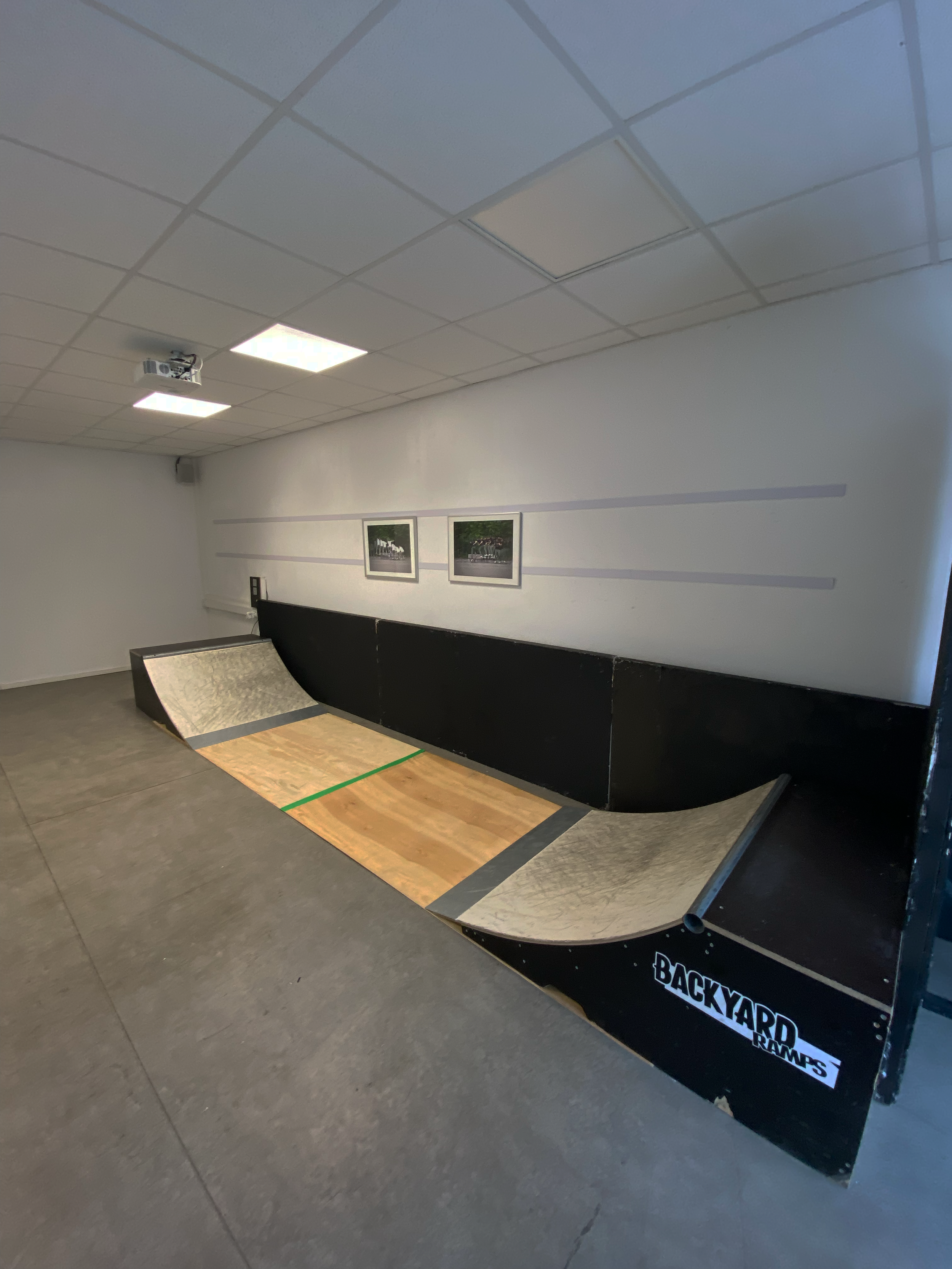
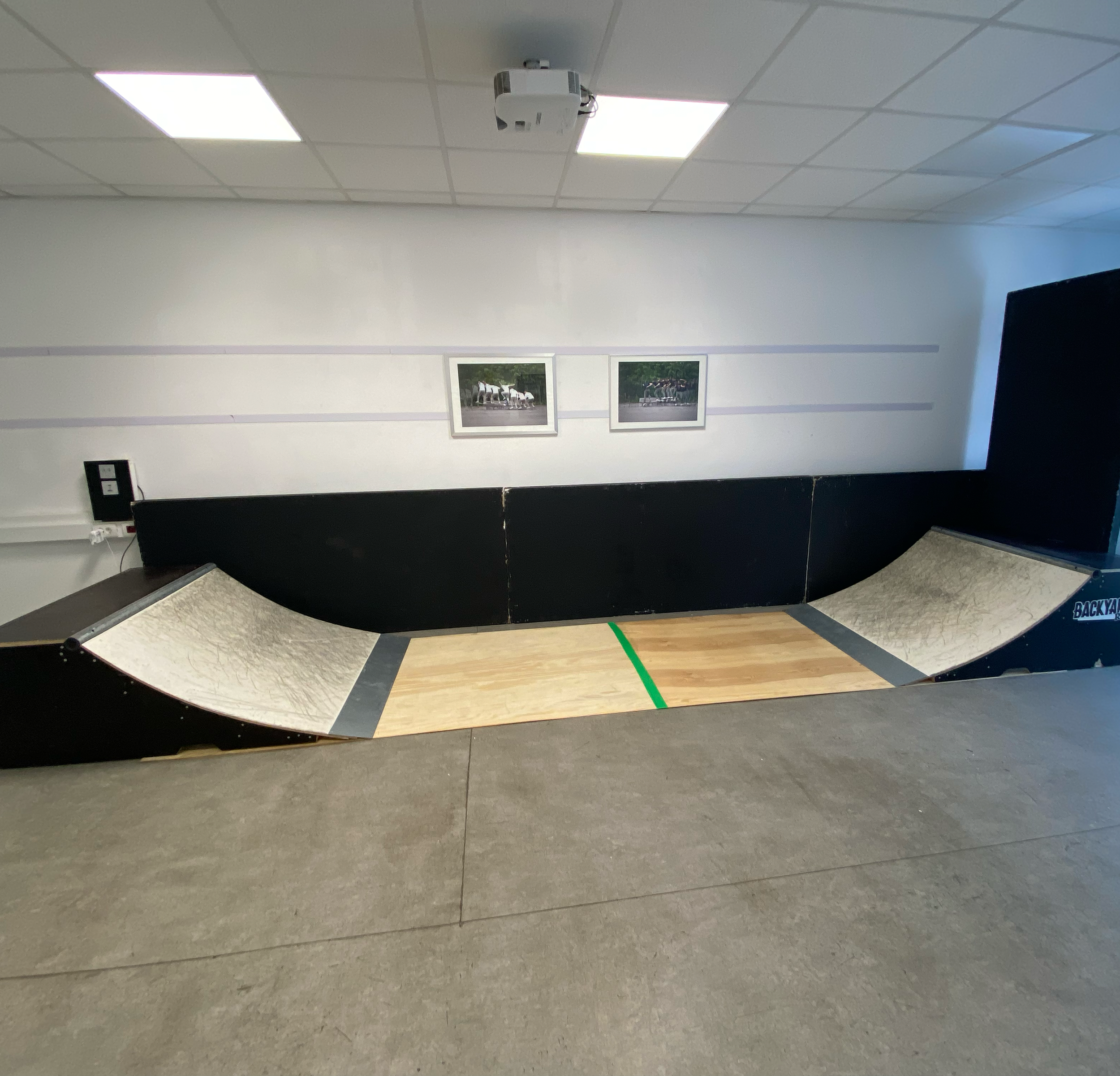
The installation combines functional skate ramps, photography, video and sound. Visitors can interact with the ramps while experiencing footage recorded at skateparks and street spots in Berlin. Rather than focusing solely on skateboarding as a sport, the installation highlights the social aspect of these spaces — the people, conversations, movement and sense of community that make them meaningful.
The project proposes a hybrid public space: part pop-up skatepark, part meeting place, part exhibition and part platform for discussion. It explores how skateboarding can be integrated into urban environments in ways that benefit both skaters and the wider public.
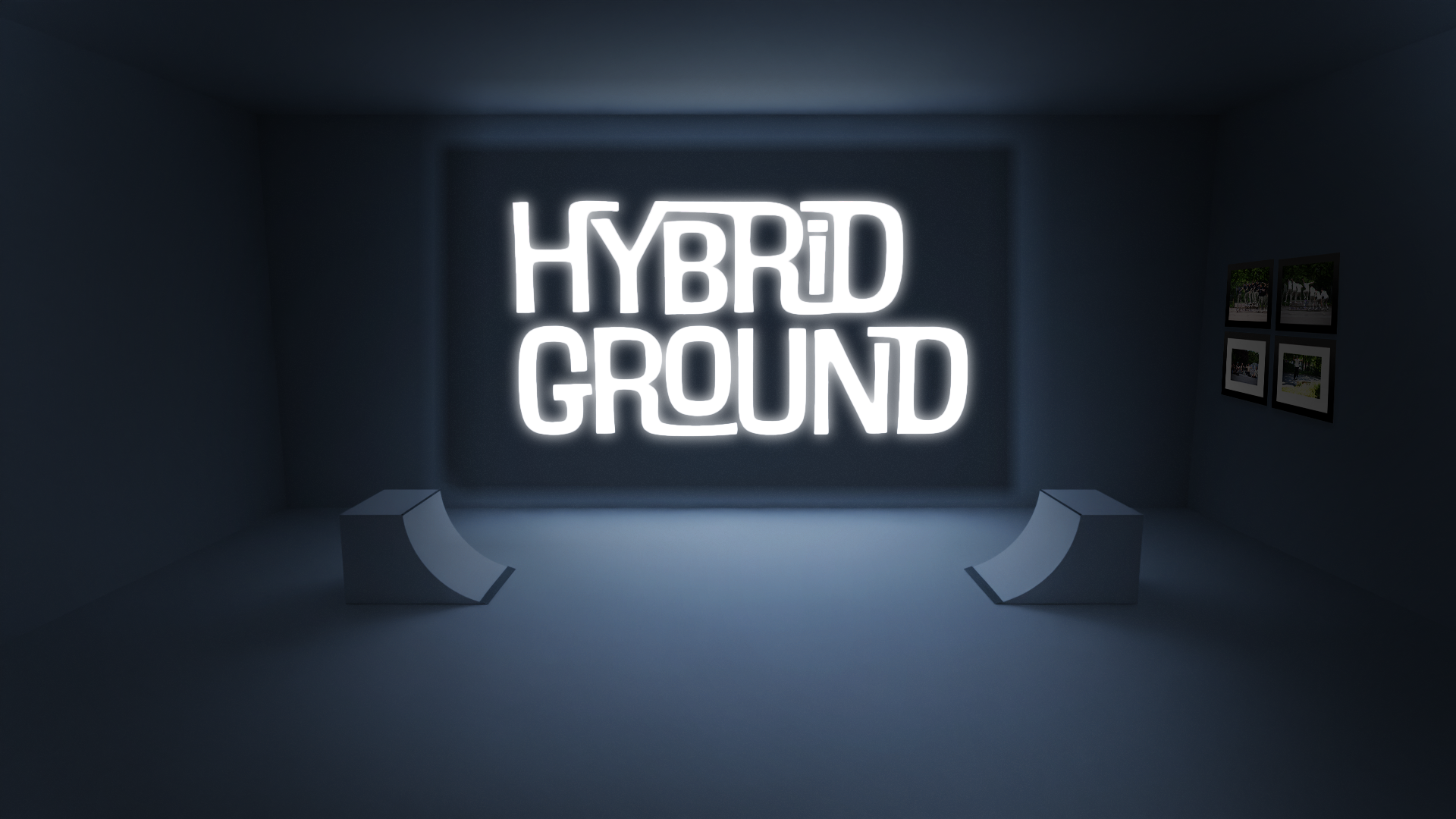
The visual and spatial concept was developed through Procreate sketches, 3D modelling in Blender, photography, filmmaking and graphic design. The project was inspired by my own experiences within Berlin's skateboarding community and by the recurring conflicts between skateboarders, public space and urban authorities.
Ultimately, Hybrid Ground asks how design can turn spaces of conflict into spaces of interaction, participation and belonging.